

When you get a mammogram, your results include a type of score called BI-RADS. This standardized scoring system helps your radiologist and physician understand each other. However, understanding mammogram results can still seem confusing to you.
The following guide is meant to help you decode your BI-RADS score. It can help you feel more confident about your mammogram results and the next steps your physician may recommend.
What Is BI-RADS?
BI-RADS stands for “Breast Imaging Reporting and Data System.” It is a tool created by the American College of Radiology. It helps ensure communication about mammogram results is consistent and that doctors interpret mammograms and breast cancer risk in a standardized manner.
Understanding mammogram results is easier with BI-RADS, which includes six categories, each with its own meaning. BI-RADS also indicates the next steps for the patient.
Why Radiologists Use BI-RADS Categories
Using the BI-RADS categories allows radiologists to communicate consistently, so physicians can easily read the report and understand the radiologist’s assessment. BI-RADS is a type of medical language ensuring healthcare professionals are all on the same page concerning breast imaging.
Understanding BI-RADS Category 0
If your report indicates Category 0, it means that the testing was incomplete. Radiologists cannot assign an accurate score yet, so they need to complete additional testing.
Understanding BI-RADS Category 1
Category 1 is a normal test result. The images show a negative result, which means there are no indications of abnormalities such as lumps, calcifications, or asymmetry. If you receive a BI-RADS 1 score, you can continue with your normal schedule for screening mammograms.
Understanding BI-RADS Category 2
Category 2 means there are no indications of cancer in the breast imaging. There is, however, something noted that is noncancerous. For example, there could be a benign cyst, calcification, or stable lymph node noted on the imaging.
Because the findings do not indicate cancer present in the breast, the patient does not have to receive follow-up imaging. They can continue with their normal screenings.
Understanding BI-RADS Category 3
A Category 3 score means the mammogram shows an abnormality with a very low chance of cancer (2% or less). If you receive this score, your doctor will likely recommend follow-up imaging every 6 to 12 months for about two years.
The extra imaging allows the physicians to keep a closer eye on the abnormal area to make sure it doesn’t change.
Understanding BI-RADS Category 4
Category 4 indicates that radiologists have found a suspicious abnormality. A radiologist will give this score if they see something that could be cancer, even if it doesn’t look exactly like cancer.
To make the score even more precise, this category is broken into subcategories. 4A means the likelihood of cancer is between 2% and 10%. 4B means the likelihood of cancer is between 10% and 50%. 4C means the likelihood of cancer is between 50% and 95%.
A patient with a BI-RADS score of 4 will probably be recommended to have a breast biopsy, so cells from the suspicious area can be tested for cancer.
Understanding BI-RADS Category 5
If the radiologist finds something in the breast that is highly suspicious for cancer, they will give it a Category 5 score. The suspicious area has between a 95% and a 100% chance of being cancer.
Most patients with a Category 5 score will need to have a breast biopsy so the physician can test cells from the suspicious area and give a diagnosis.
Understanding BI-RADS Category 6
Category 6 is only used for patients who have already had a breast biopsy and are known to definitely have cancer. Doctors may use mammograms to monitor how the cancer responds to treatment. At this point, the patient will already have a breast cancer treatment plan that they will be following.
What Happens After an Abnormal Mammogram?
It is important to remember that most mammographic abnormalities are not cancer. If there is an abnormality, follow-up imaging may be recommended. Schedule follow-up imaging as soon as possible after the mammographic abnormalities.
This will help determine if there is cancer or not. If it is not cancer, you can experience peace of mind. If it is cancer, it is best to get treatment early for the best outcomes.
Common Follow-Up Imaging After a Mammogram
There are a few different types of follow-up imaging after a screening mammogram:
- A diagnostic mammogram is similar to a screening mammogram except that it may include more views of a specific area.
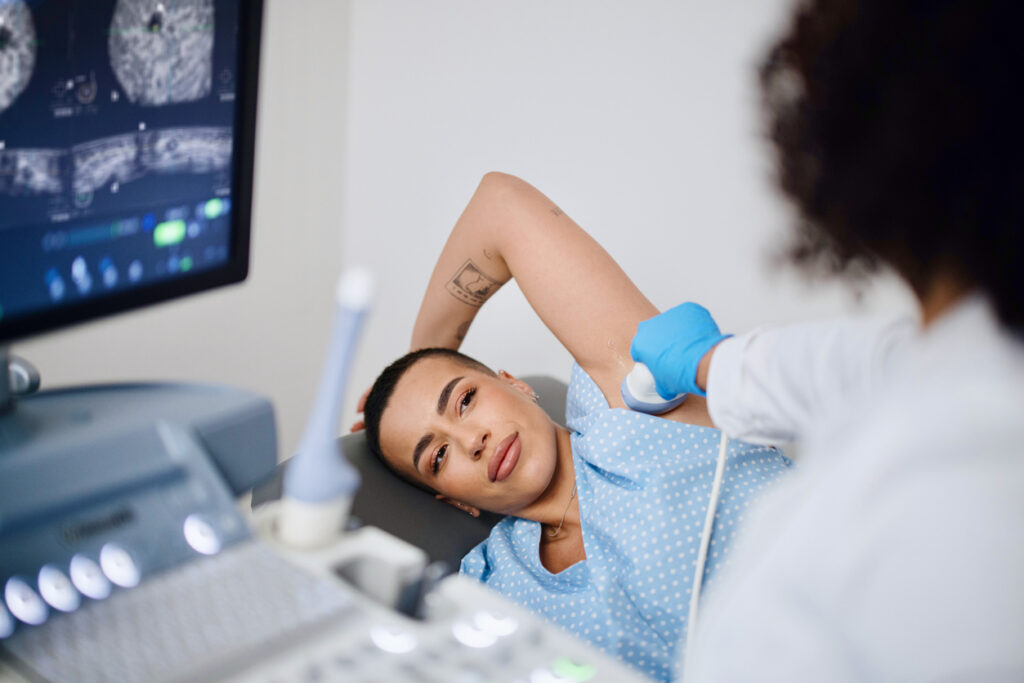
- A breast ultrasound uses sound waves to view the breast in a non-invasive way.
- If the patient is at a higher risk for breast cancer, a breast MRI may be recommended. Breast MRI uses magnetic fields to create images of the breast. It involves an IV before the procedure, making it more involved than other imaging types.
If follow-up imaging shows no cancer, doctors typically do not recommend additional imaging. Patients then continue with their normal screening mammograms.
Questions to Ask About Your Mammogram Results
Having questions ready ahead of time can help you feel more prepared and eliminate unnecessary worry. Here are a few questions you may want to ask your doctor to help you understand your mammogram results:
- What is my BI-RADS score?
- Do I have factors that put me at greater risk for cancer?
- What are my next steps?
- Will you let me know if something is abnormal?
- Do I have dense breast tissue?
- What does my BI-RADS score for breast density mean?
- When should I schedule my next mammogram?
Having clear answers about understanding mammogram results can help you feel more informed and confident about your next steps with your healthcare provider.
Why Regular Breast Cancer Screening Matters
Getting a regular breast cancer screening is important because understanding mammogram results can help identify cancer within the breast before there are any signs or symptoms.
Finding breast cancer early is better because it is easier to treat in its early stages. This lowers the risk of dying from breast cancer.
The US Preventive Services Task Force recommends that women who are 40 to 74 years old and are at average risk for breast cancer get a mammogram every 2 years.

Schedule Your Mammogram or Follow-Up Imaging
Schedule your screening mammogram or follow-up imaging at Women’s Imaging Specialists. We are committed to providing high-quality care using state-of-the-art imaging technology. Contact us with any questions.